
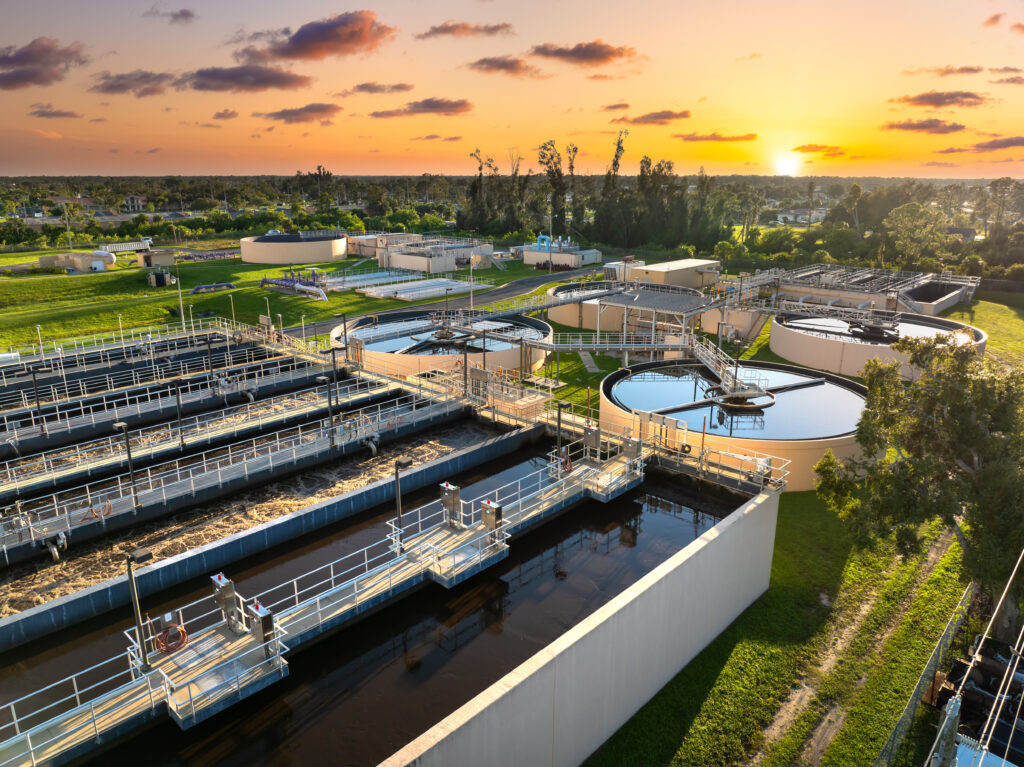

MBBR dairy wastewater treatment gives dairy plants a compact way to cut organic load. Dairy effluent is rich in milk sugar, fat and protein. As a result, it carries a very high BOD. A moving bed biofilm reactor handles this load well, and it fits into a small footprint.
Why Dairy Wastewater Is Difficult to Treat
Dairy plants produce wastewater in sudden waves. For example, a cleaning cycle can double the flow within minutes. Moreover, the pH swings between acidic and alkaline because of cleaning chemicals. These shocks upset many conventional systems.
Fat and milk solids add another problem. Fat coats equipment and blocks oxygen transfer. Therefore, most plants need a good pretreatment step before the biological stage. A dissolved air flotation unit often does this job well.
Nutrients create a further challenge. Milk contains nitrogen and phosphorus. Thus, plants must plan for nutrient removal as well. Fortunately, an MBBR can combine aerobic and anoxic zones for this purpose.
How MBBR Dairy Wastewater Treatment Handles High Organic Loads
In an MBBR, thousands of plastic carriers move freely in the reactor. Bacteria grow as a thin biofilm on each carrier. Because the biofilm stays attached, the system holds a large amount of biomass in a small tank. In addition, the biomass does not wash out during flow peaks.
This design gives MBBR a real edge on dairy loads. The biofilm adapts quickly to changing food supply. As a result, effluent quality stays stable even when the plant changes products. Furthermore, the process needs no sludge recycle, so operators have less to manage.
Oxy-Film carriers add to this strength. Their protected inner surface gives bacteria a safe place to grow. For instance, a high surface area per cubic metre lets you build smaller tanks. You can read more in our guide to MBBR media for food and beverage wastewater treatment.
Key Design Tips for Dairy Plants
Follow these steps to get stable results:
- Equalize the flow. A buffer tank smooths out peaks and pH swings.
- Remove fat first. A DAF unit or grease trap protects the reactor.
- Adjust the pH. Keep the reactor between 6.5 and 8.0.
- Choose the right fill ratio. Most dairy designs fill 40 to 50 percent of the tank with media.
- Aerate well. Good mixing keeps the carriers moving and the biofilm healthy.
Start-up also matters. Seed the reactor with healthy sludge and feed it steadily. Within a few weeks, the biofilm will form and carry the load.
Results You Can Expect
A well-designed MBBR can remove most of the BOD from dairy wastewater. However, final results depend on pretreatment and loading. In many plants, a clarifier or filter polishes the effluent. Additionally, a small MBBR can upgrade an old lagoon without a new site.
Meanwhile, discharge limits keep getting tighter. The US EPA effluent guidelines cover many industries, including dairy processing, and other countries follow similar rules. Therefore, a robust biological stage protects you from fines. Overall, MBBR dairy wastewater treatment offers a reliable, space-saving answer. Contact our team today to size a reactor for your dairy plant.