
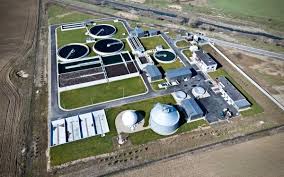
MBBR solids separation is the step that turns a good biological process into clean final effluent. The moving bed biofilm reactor removes dissolved pollutants very well. However, it does not hold back the biomass that sloughs off the carriers. As a result, every MBBR plant needs a solids separation unit downstream.
In this guide, we compare the main options. We also explain how to match each one to your flow, your discharge limits and your site.
Why MBBR Solids Separation Works Differently
In activated sludge, operators return settled sludge to the aeration tank. An MBBR, by contrast, keeps its biomass on the carriers. Therefore, the plant needs no sludge return line.
This changes the job of the separator. It only has to remove excess biofilm and other suspended solids once. In addition, MBBR effluent often carries just a few hundred mg/L of solids. For example, a conventional activated sludge clarifier works with 3,000 mg/L or more.
Still, MBBR solids do not always settle well. Fine, dispersed particles may need help to form larger flocs. For this reason, many plants add a small dose of coagulant or polymer before separation.
Main Options for Separating MBBR Solids
Designers usually choose from four proven technologies. Each one has clear strengths and limits.
- Conventional clarifiers: Simple, robust and cheap to run. However, they need the most space.
- Lamella settlers: Inclined plates boost the settling area. As a result, they fit into a much smaller footprint.
- Dissolved air flotation (DAF): Fine bubbles lift solids to the surface. In fact, DAF works well with light, poorly settling biofilm.
- Disc or cloth filters: They deliver very low effluent TSS. Moreover, many plants use them after a clarifier as a polishing step.
How to Choose the Right Separation Step
Start with your discharge permit. If the limit for suspended solids is strict, a clarifier alone may not be enough. In that case, add a filter after it. The U.S. EPA explains how permits set these limits in its municipal wastewater guidance.
Next, look at the space you have. Lamella settlers and DAF units save a lot of room. Consequently, they suit compact industrial sites and plant retrofits.
Then consider your wastewater. Fatty or oily effluent from food plants often floats rather than sinks. For such streams, DAF is usually the better choice. On the other hand, municipal sewage settles well in clarifiers and lamella units.
Finally, weigh your running costs. DAF needs air saturation pumps and chemicals, so it uses more energy. Clarifiers, in contrast, need little power and little care.
Tips to Improve MBBR Solids Separation
Good design upstream makes separation easier. Keep these points in mind:
- Use a well-designed sieve so carriers stay inside the reactor.
- Avoid over-aeration, because strong turbulence shears flocs into fine particles.
- Run jar tests to find the right coagulant and polymer dose.
- Add a short flocculation tank before the separator to grow larger flocs.
- Choose carriers that hold a steady biofilm, such as Oxy-Film™ MBBR media, to limit sudden sloughing.
Even with good design, problems can appear. For instance, rising sludge or cloudy effluent often points to a process issue. Our guide to MBBR troubleshooting shows how to fix the most common faults.
Get Expert Support for Your MBBR Plant
In short, MBBR solids separation deserves as much attention as the biological stage. The right choice depends on your permit, site, wastewater and budget. Above all, test your actual solids before you commit to a design.
Oxy-Tech supplies high-performance MBBR carriers and supports projects from design to start-up. Contact our team to discuss the best solids separation step for your plant.