
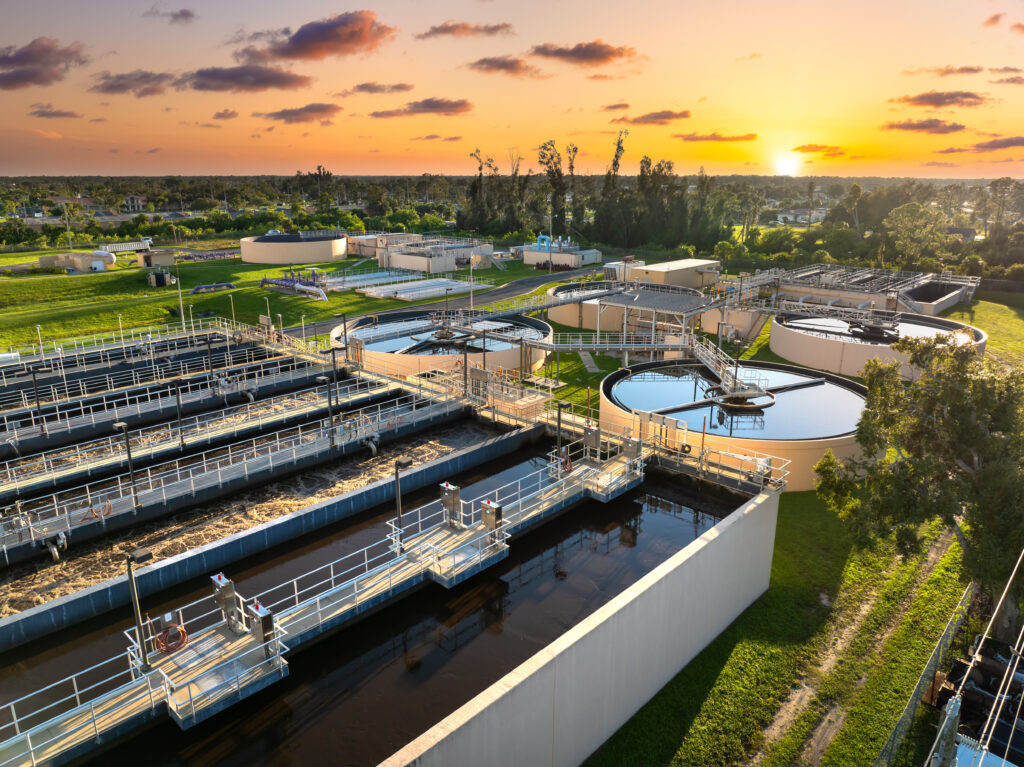

Municipal wastewater treatment plants face rising flows and stricter discharge limits every year. MBBR municipal wastewater treatment offers a practical fix. Moving bed biofilm reactor (MBBR) media packs extra biological capacity into existing tanks. As a result, plants can meet tougher ammonia and BOD limits without building new basins. This matters most for cities with limited land or tight budgets.
In this guide, we explain how MBBR media works in municipal plants. We also cover why biofilm carriers outperform older methods, and what to check before choosing this technology.
MBBR Municipal Wastewater Treatment: Handling Variable Flows
Municipal wastewater carries a mix of household and light industrial waste. Flows also swing sharply between morning and night. MBBR media handles these swings well because biofilm carriers hold a stable population of bacteria regardless of flow rate. Each carrier gives bacteria a protected surface to grow on. Therefore, the biomass stays in the tank even during storm flows or plant upsets.
Unlike activated sludge, MBBR media does not need sludge recycling to keep bacteria in the system. This simplifies operation for municipal crews with limited staff. In fact, many towns retrofit old aeration basins with biofilm carriers instead of building new tanks. This approach cuts capital costs sharply.
For example, one mid-size plant added carriers to an existing basin. As a result, it doubled ammonia removal capacity within the same footprint. Similarly, other municipalities use MBBR media to meet new nitrogen limits without a major plant expansion. If you want a deeper technology comparison, see our MBBR vs Activated Sludge guide.
Additionally, biofilm carriers resist washout, so operators do not lose treatment capacity during peak flow events. Consequently, effluent quality stays consistent even when flows spike after heavy rain.
Nitrification and Ammonia Removal in Municipal Plants
Ammonia limits keep getting stricter, and MBBR municipal wastewater treatment plants must adapt quickly. MBBR media supports strong nitrification because nitrifying bacteria grow slowly and need a stable surface. Biofilm carriers give them exactly that. As a result, plants achieve consistent ammonia removal even in cold weather, when nitrifiers struggle most.
Moreover, operators can add a separate MBBR stage just for nitrification. This keeps carbon removal and nitrification apart, which improves control over each process. In short, this staged approach helps plants hit low effluent ammonia targets consistently.
Denitrification follows a similar principle. Anoxic MBBR zones give bacteria the right surface and environment to convert nitrate into nitrogen gas. Therefore, total nitrogen drops before the water leaves the plant. Many municipal plants must meet strict nutrient limits under federal discharge permits. According to the EPA’s NPDES program, permits increasingly include tighter nitrogen and phosphorus limits. MBBR media helps plants meet these requirements cost-effectively.
Choosing MBBR Media for a Municipal Retrofit
Not every carrier works the same way in a municipal setting. Surface area, shape, and material all affect performance. However, higher surface area alone does not guarantee better results. Carrier geometry and biofilm protection matter just as much.
Municipal engineers should also check fill ratio before ordering media. Overfilling a tank reduces mixing and hurts oxygen transfer. Underfilling wastes available capacity. Therefore, a proper fill ratio calculation is essential before any retrofit.
Cost matters too. Durable HDPE carriers last for decades under normal operating conditions. As a result, the upfront investment pays off over the plant’s lifetime. This makes MBBR municipal wastewater treatment upgrades cost-effective for cities of any size.
Ready to Upgrade Your Municipal Plant?
MBBR media gives municipal plants a proven way to expand treatment capacity. It handles variable flows, supports reliable nitrification, and fits within existing infrastructure. Contact Oxy-Tech to discuss the right biofilm carrier media for your municipal upgrade.