
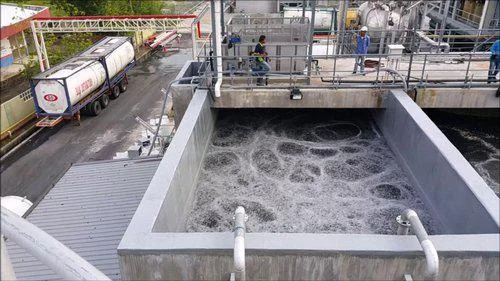
Most engineers approach MBBR design with one primary goal: meet discharge limits.
But once the system is running, a different reality emerges:
Energy becomes the dominant operating cost.
In many MBBR installations, aeration alone accounts for 50–70% of total energy consumption.
Yet here’s the uncomfortable truth:
Most systems are not optimized for energy — they are over-aerated to stay “safe.”
This article explains how MBBR media selection and aeration strategy directly impact energy consumption — and how to reduce it without sacrificing performance.
1. The Hidden Cost of “Playing Safe”
Operators often increase airflow to ensure:
- Sufficient oxygen supply
- Proper media mixing
- Stable nitrification
While this prevents process failure, it creates a new problem:
- Excess energy consumption
- Reduced blower efficiency
- Unnecessary operational cost
More air does not always mean better treatment.
In many cases, it simply means wasted energy.
2. MBBR Media and Oxygen Efficiency Are Linked
Media design directly affects how efficiently oxygen is used.
Key factors:
Effective Biofilm Structure
Well-designed media creates:
- Thin, active biofilm layers
- Better oxygen penetration
- Reduced diffusion resistance
Poor media leads to:
- Thick biofilm
- Oxygen starvation inside layers
- Lower biological efficiency
Surface Distribution
Uniform biofilm growth ensures:
- Even oxygen demand across the reactor
- Stable DO profiles
- Reduced need for excess aeration
3. Aeration Has Three Jobs — Not One
In MBBR systems, aeration is often misunderstood.
It does not only supply oxygen.
It also:
- Keeps media in motion
- Controls biofilm thickness (shear)
- Distributes substrates
If aeration is reduced blindly:
- Media stops moving
- Biofilm overgrows
- Process stability collapses
If aeration is excessive:
- Energy is wasted
- Biofilm becomes too thin
- Efficiency drops
Optimization is about balance — not extremes.
4. Dissolved Oxygen Setpoint Optimization
Many plants operate at:
- 3–4 mg/L DO (or higher)
This is often unnecessary.
Typical optimized ranges:
- 2.0–2.5 mg/L for nitrification systems
Operating above this level:
- Increases energy demand
- Provides diminishing biological returns
Smart systems use:
- DO sensors
- Variable frequency drives (VFD)
- Automated control loops
To match oxygen supply with real demand.
5. Media Fill Ratio and Energy Demand
Higher media fill ratios increase:
- Oxygen demand
- Mixing resistance
- Airflow requirement
At some point:
- Additional media reduces mixing efficiency
- Requires higher air input
- Increases operational cost
Optimal fill ratio is not only about capacity —
it is also about energy efficiency.
6. Fine Bubble vs Coarse Bubble Strategy
Many MBBR systems use coarse bubble aeration for mixing.
But combining systems can improve efficiency:
- Fine bubble → oxygen transfer
- Coarse bubble → mixing
Hybrid strategies can:
- Reduce energy use
- Improve oxygen distribution
- Maintain media movement
7. Signs Your System Is Wasting Energy
Look for:
- Constant high blower output
- DO levels always above setpoint
- Uneven media movement
- High energy bills with stable load
- No correlation between load and airflow
These are clear indicators of poor optimization.
Conclusion
MBBR systems are often designed for performance — but operated inefficiently.
Real optimization requires understanding the link between:
- Media design
- Biofilm behavior
- Aeration control
- Energy consumption
The goal is not maximum air.
The goal is maximum biological efficiency per unit of energy.
Plants that optimize this achieve:
- Lower operating cost
- Stable treatment performance
- Better long-term sustainability
info@oxy-tech.com.tr
+90 224 251 61 62