
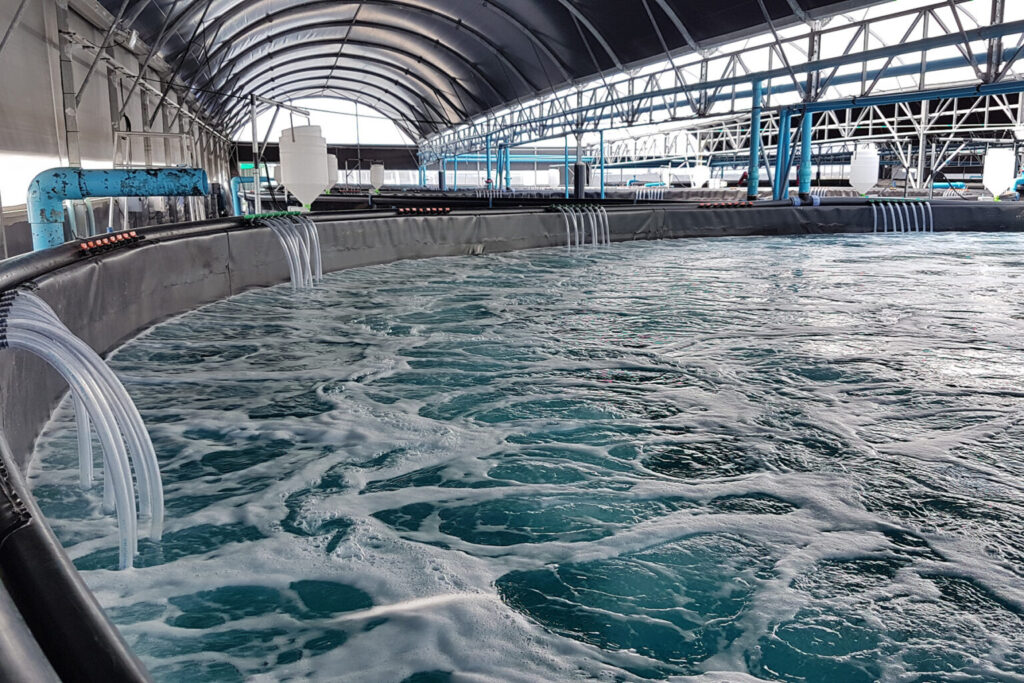
In aquaculture, operators often invest heavily in tanks, pumps, oxygen systems, feeders, and monitoring equipment. Yet one of the most important components is frequently treated as a commodity:
MBBR media.
That is a costly mistake.
In Recirculating Aquaculture Systems (RAS), the carrier media inside your biofilter determines how effectively ammonia is converted, how stable water quality remains, and how resilient the system is during stress events.
Not all media performs the same.
And in aquaculture, poor media selection can become an expensive operational problem.
1. MBBR Media Is More Than Plastic Pieces
Many buyers compare media based only on:
- Price per cubic meter
- Claimed surface area
- Shape or size
But MBBR media is not simply plastic filler.
It is the living platform where nitrifying bacteria establish biofilm communities responsible for ammonia removal.
The wrong media can reduce:
- Active bacterial surface
- Oxygen penetration
- Mixing quality
- Long-term biological stability
2. Why Surface Area Claims Can Be Misleading
Manufacturers often promote total surface area values such as:
- 500 m²/m³
- 800 m²/m³
- 1000+ m²/m³
But in aquaculture, usable protected surface area matters more than total area.
If surfaces are too exposed:
- Biofilm shears off too easily
If channels are too tight:
- Clogging risk increases
- Oxygen transfer drops
If geometry is poorly designed:
- Dead zones form inside the media
The highest number on paper is not always the best real-world option.
3. Media Movement and Mixing Matter
A healthy MBBR system depends on constant carrier movement.
Why?
Because movement creates:
- Even biofilm growth
- Self-cleaning collisions
- Uniform oxygen exposure
- Better contact between water and bacteria
If media is too heavy, too light, or poorly shaped:
- Circulation becomes inconsistent
- Biomass distribution becomes uneven
- Reactor efficiency declines
In aquaculture, stable movement = stable biology.
4. Durability Is a Long-Term Economic Factor
Some operators buy cheaper media and focus only on initial cost.
But over time, low-quality media may:
- Crack or deform
- Lose buoyancy balance
- Abrade into fragments
- Require replacement shutdowns
This creates:
- Maintenance cost
- Downtime risk
- Process instability
High-quality media often costs less over the lifecycle, even if purchase price is higher.
5. Media Choice Must Match Fish Load and Feeding Strategy
There is no universal “best media.”
A hatchery, shrimp farm, and salmon RAS facility may need different priorities.
Examples:
High-density fish production:
- Strong mixing behavior
- Reliable nitrification under peaks
Hatcheries:
- Stable low-load performance
- Fine biological control
Variable feeding operations:
- Fast recovery after spikes
- Robust biofilm retention
Carrier selection should match operating reality — not marketing brochures.
6. Signs Your Media Is the Wrong Choice
Watch for recurring symptoms:
- Frequent ammonia spikes
- Uneven dissolved oxygen in biofilter zones
- Excessive biofilm sloughing
- Media stagnation areas
- Declining nitrification despite good aeration
Often operators blame pumps or bacteria additives first.
But the root issue may be the media itself.
7. The Smarter Buying Question
Instead of asking:
“What is the cheapest media?”
Ask:
“Which media creates the most stable water quality for my species, density, and feeding profile?”
That question leads to better decisions.
Conclusion
In aquaculture, MBBR media is not a low-priority accessory.
It is a core biological asset.
The right carrier media helps deliver:
- Better ammonia control
- Stable nitrification
- Lower operational risk
- Better fish health outcomes
The wrong media may look cheaper at purchase — but expensive in operation.
Choose media based on biology, hydraulics, and durability.
That is how professional RAS systems scale successfully.
info@oxy-tech.com.tr
+90 224 251 61 62