Why 19-Chamber MBBR Media Improves Biological Wastewater Treatment Performance Choosing the right MBBR media is one of the most important decisions when designing or upgrading a biological wastewater treatment plant. While specific surface area is often the first specification engineers compare, it is only one part of the equation. The geometry of the carrier plays […]
Read More
When investing in a Moving Bed Biofilm Reactor (MBBR) system, one of the most common questions engineers and plant operators ask is: How long does MBBR media last? Since the biofilm carrier is the heart of the biological treatment process, its durability directly impacts system performance, maintenance costs, and return on investment. The good news […]
Read More
When engineers compare MBBR media, one specification usually attracts the most attention: Specific Surface Area (SSA). It is common to assume that a carrier offering 800, 900, or even 1,200 m²/m³ must perform better than one rated at 650 m²/m³. At first glance, the logic seems simple: More surface area = more biofilm = better […]
Read More
As environmental regulations become increasingly strict, industries and municipalities are searching for wastewater treatment technologies that provide high efficiency while minimizing footprint and operating costs. Among today’s biological treatment technologies, the Moving Bed Biofilm Reactor (MBBR) process has become one of the most preferred solutions due to its compact design, operational stability, and high organic […]
Read More
Moving Bed Biofilm Reactor (MBBR) technology has become one of the most widely adopted biological wastewater treatment processes worldwide. At the heart of every MBBR system lies the biofilm carrier media, which provides the surface area required for microorganisms to grow and remove pollutants efficiently. Selecting the right MBBR media is critical for achieving stable […]
Read More
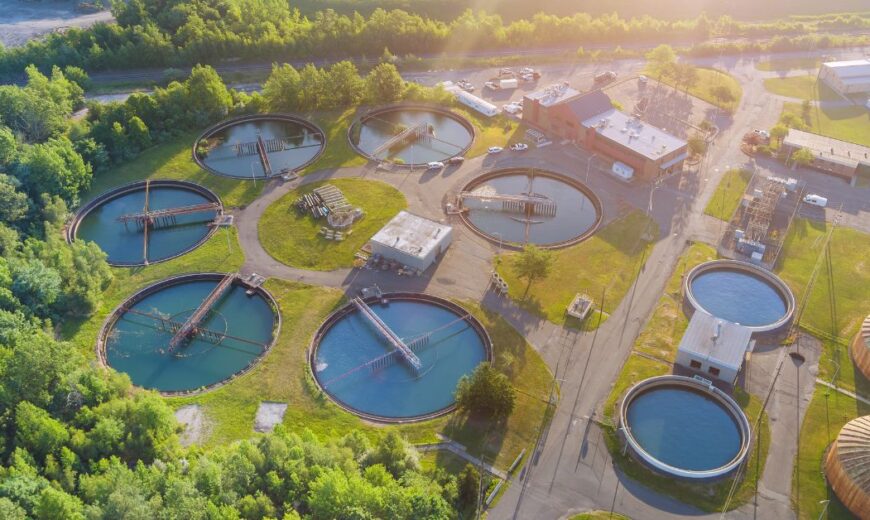
Introduction As wastewater treatment requirements become more stringent worldwide, treatment technologies must provide higher efficiency, operational flexibility, and lower operating costs. One of the most widely adopted biological treatment technologies today is the Moving Bed Biofilm Reactor (MBBR) system. At the center of every successful MBBR process lies the MBBR media, specially designed plastic carriers […]
Read More
In MBBR (Moving Bed Biofilm Reactor) systems, one design parameter quietly determines a large part of the process behavior: The media filling ratio. It is often treated as a simple percentage during design, but in reality, it directly influences: Choosing the wrong filling ratio does not just reduce efficiency — it can fundamentally change how […]
Read More
Industrial wastewater rarely stays stable. One day a treatment system operates under normal conditions.The next day it may experience: For many conventional biological systems, these fluctuations create serious operational stress. This is exactly why more industries are adopting: MBBR (Moving Bed Biofilm Reactor) technology MBBR systems are especially effective in environments where wastewater characteristics constantly […]
Read More
As urbanization and industrial growth continue, wastewater treatment facilities face increasing pressure: Traditional biological treatment systems often require large basins and extensive infrastructure. This is one reason why many modern facilities are turning to: MBBR (Moving Bed Biofilm Reactor) technology. MBBR systems provide high biological treatment efficiency while significantly reducing the required plant footprint. For […]
Read More
Most engineers approach MBBR design with one primary goal: meet discharge limits. But once the system is running, a different reality emerges: Energy becomes the dominant operating cost. In many MBBR installations, aeration alone accounts for 50–70% of total energy consumption. Yet here’s the uncomfortable truth: Most systems are not optimized for energy — they […]
Read More