
Energy consumption is one of the largest operational costs in wastewater treatment plants. In biological treatment systems, aeration alone can account for 50–70% of total energy usage. As energy prices continue to rise and sustainability targets become stricter, treatment plants must focus not only on meeting discharge standards but also on optimizing energy efficiency.
This is where MBBR (Moving Bed Biofilm Reactor) technology plays a critical role.
.
Why Energy Efficiency Matters in Wastewater Treatment
Wastewater treatment facilities face three major pressures:
- Increasing energy costs
- Stricter discharge regulations
- Carbon footprint reduction targets
Traditional activated sludge systems often require large tank volumes, high sludge recirculation rates, and continuous high aeration intensity. These factors significantly increase power consumption.
MBBR technology offers a smarter biological design approach that directly impacts energy performance.
How MBBR Technology Reduces Energy Consumption
1. Higher Biomass Concentration in Smaller Volumes
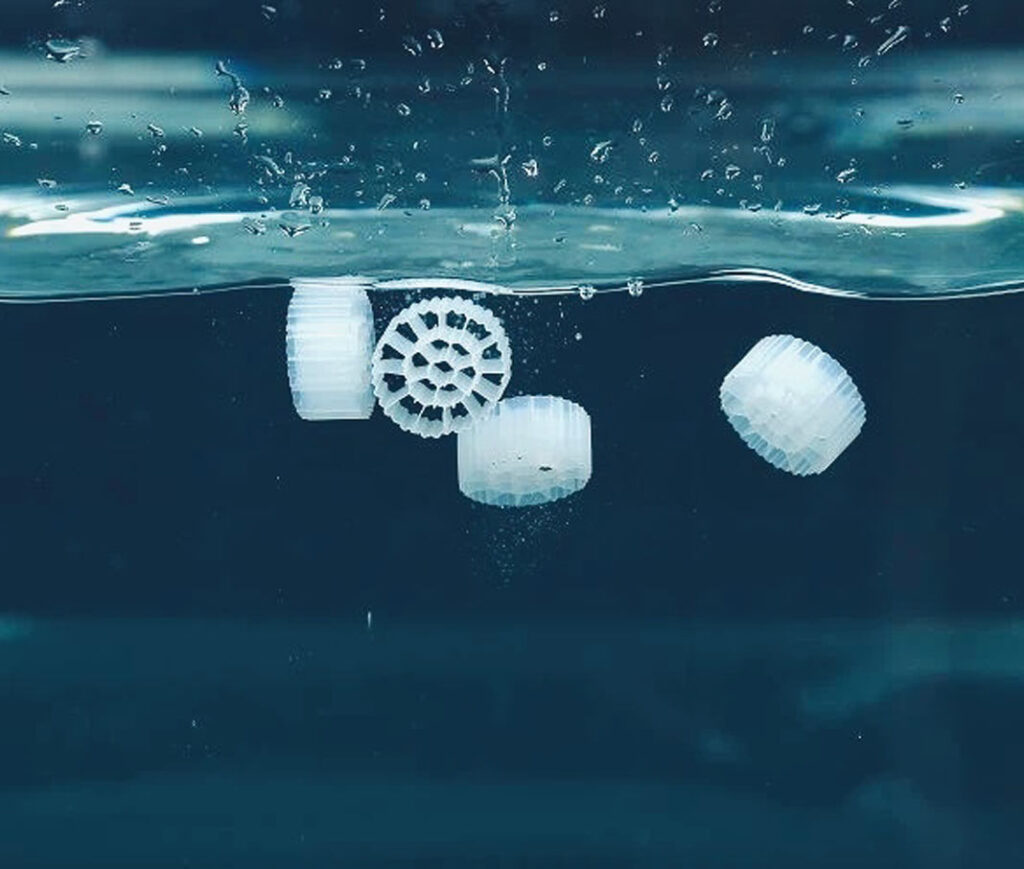
MBBR systems use biofilm carriers with high specific surface area. These carriers allow microorganisms to grow in attached biofilm form rather than remaining suspended in mixed liquor.
Result:
- Higher biomass concentration
- Increased biological reaction rates
- Smaller reactor volume requirements
Smaller tanks mean lower aeration demand and reduced mixing energy.
2. Reduced Sludge Recirculation
Unlike conventional activated sludge systems, MBBR does not require return activated sludge (RAS) for biomass retention.
Energy impact:
- No RAS pumps
- Lower hydraulic load
- Reduced pumping energy
This alone can significantly cut total plant electricity consumption.
3. Optimized Aeration Efficiency
In MBBR systems, aeration serves two purposes:
- Oxygen transfer
- Carrier movement and mixing
Because biomass is attached to carriers:
- There is no need to maintain high MLSS concentrations
- Oxygen transfer efficiency can be better controlled
- Aeration intensity can be optimized based on process demand
This leads to lower blower capacity requirements and reduced operational hours.
4. Stable Process Performance = Less Energy Waste
MBBR systems are highly resilient to shock loads and hydraulic fluctuations.
Stable biological activity means:
- Fewer process upsets
- Less emergency aeration
- Reduced need for corrective operational adjustments
Stability directly translates to energy savings over time.
5. Retrofit Advantage
One of the biggest advantages of MBBR technology is its ability to upgrade existing plants without constructing new tanks.
Instead of building additional aeration basins, facilities can:
- Install MBBR bio media into existing tanks
- Increase treatment capacity
- Improve nitrification performance
All without significantly increasing energy demand.
Energy Savings in Nitrification Applications
Nitrification is one of the most energy-intensive biological processes in wastewater treatment.
MBBR systems allow:
- High nitrifying biomass retention
- Improved oxygen utilization
- Lower sludge age dependency
This enables more efficient ammonia removal with optimized aeration control.
Environmental and Economic Impact
Energy savings from MBBR systems contribute to:
- Lower operational costs
- Reduced carbon emissions
- Smaller plant footprint
- Sustainable wastewater management
When designed correctly, MBBR technology provides both technical performance and long-term economic advantage.
Why Media Quality Matters
Energy efficiency is not only about the process design but also about the quality of bio media used.
Key parameters that directly influence energy performance:
- Effective specific surface area
- Proper density (close to water density)
- Optimized geometry for oxygen transfer
- Mechanical durability
Poor-quality carriers can increase aeration demand and reduce biological efficiency, eliminating potential energy savings.
Conclusion
MBBR technology is not just a biological treatment method — it is a strategic solution for energy optimization in modern wastewater treatment plants.
By:
- Increasing biomass efficiency
- Reducing pumping requirements
- Optimizing aeration demand
- Enhancing process stability
MBBR systems help facilities achieve both environmental compliance and energy sustainability goals.
Contact Us
At Oxy-Tech, we manufacture and supply high-performance MBBR bio media (Oxy-Film Carrier) designed for maximum surface efficiency and optimized biological performance.
If you are planning:
- A new wastewater treatment plant
- A capacity upgrade
- An energy optimization retrofit
Our technical team is ready to support your project.
📩 Contact us today to discuss how MBBR technology can improve your plant’s energy efficiency.
🌐 info@oxy-tech.com.tr
+90 224 251 61 62