
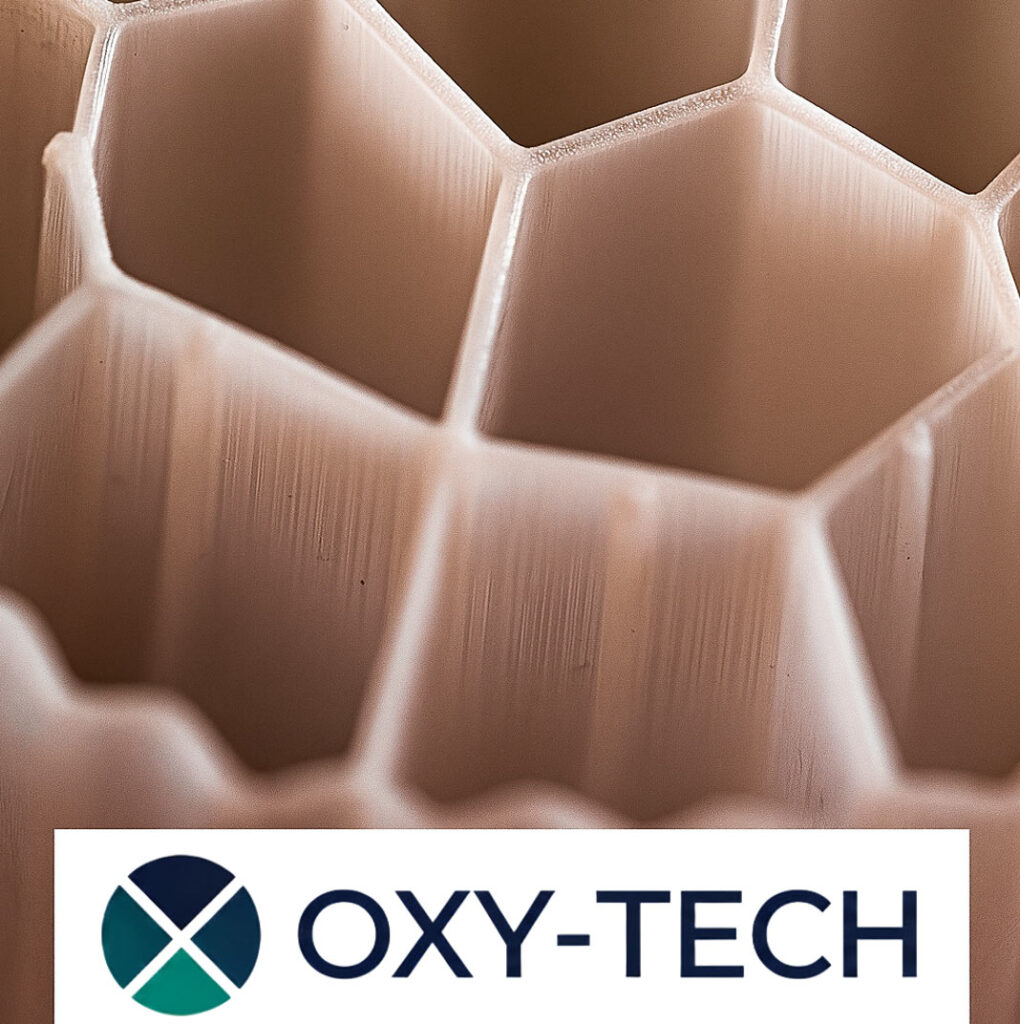
Most discussions around Moving Bed Biofilm Reactor (MBBR) systems focus on surface area values and filling ratios. That’s shallow thinking.
In reality, the true performance of an MBBR system is dictated by how media design interacts with biology, hydrodynamics, and oxygen transfer simultaneously. If you don’t understand this interplay, you’re not designing — you’re guessing.
1. Media Geometry Is Not Just Surface Area
The market loves to sell “high surface area” media — 650 m²/m³, 800 m²/m³, even higher.
But here’s the uncomfortable truth:
Not all surface area is biologically active.
What actually matters is:
- Protected surface area (inside structures)
- Shear-controlled zones
- Biofilm retention under varying loads
Media with complex internal channels protects biomass from shear forces, allowing:
- Stable nitrification
- Reduced biomass sloughing
- Better resistance to hydraulic shocks
2. Biofilm Thickness Control: The Hidden Lever
In MBBR systems, you are not controlling biomass concentration like in activated sludge.
Instead, you are indirectly controlling:
- Biofilm thickness
- Mass transfer resistance
- Substrate diffusion
If biofilm becomes too thick:
- Oxygen cannot penetrate → anaerobic zones form unintentionally
- Ammonia removal drops
- Sloughing events increase
If too thin:
- You lose nitrifiers
- System becomes sensitive to load variations
Good media design creates a natural balance via shear and geometry.
3. Hydrodynamics: The Silent Performance Driver
Most engineers underestimate mixing behavior.
In reality:
- Media must remain in continuous motion
- Dead zones = dead performance
- Collisions between carriers = self-cleaning mechanism
Poor hydrodynamics leads to:
- Uneven biofilm growth
- Local overloading
- Reduced effective volume
4. Oxygen Transfer vs Biofilm Demand
In aerobic MBBR:
- Oxygen must pass through:
- Water
- Biofilm outer layer
- Inner biofilm layers
This creates a gradient system:
- Outer layer → carbon oxidation
- Inner layer → nitrification
If aeration is poorly designed:
- Inner layers starve
- Nitrification collapses first
5. Media Filling Ratio: More Is Not Always Better
A common mistake:
“Let’s increase media volume to increase capacity.”
Wrong.
Beyond an optimal point:
- Mixing efficiency drops
- Energy consumption increases
- Media movement becomes restricted
Typical optimal range:
- 40–60% filling ratio (depending on process)
6. Shock Load Resilience: Where MBBR Wins
Well-designed MBBR systems outperform activated sludge in:
- Hydraulic shocks
- Toxic loads
- Flow variations
Why?
Because:
- Biomass is attached, not suspended
- No sludge washout risk
- Biofilm structure provides biological buffering
Conclusion
MBBR is not just a “plug-and-play” technology.
It is a multi-variable system where media design, aeration, and reactor hydraulics must work together.
If you focus only on surface area, you will underperform.
If you design the system as an integrated whole, you unlock:
- Higher stability
- Better nitrification performance
- Lower operational risk
Contact Us
info@oxy-tech.com.tr
+90 224 251 61 62