
A good plan for MBBR slaughterhouse wastewater starts with knowing the effluent. Meat plants discharge fat, blood, and protein in large amounts. Therefore, the load changes fast during each shift. A moving bed biofilm reactor copes well with these swings.
Why Slaughterhouse Effluent Is Difficult
Slaughterhouse effluent has very high COD and BOD. It also carries fats, oils, and grease that coat equipment. In addition, it contains a lot of nitrogen from blood and protein. As a result, simple systems often struggle to meet limits.
Flow is uneven too. Washing happens in short bursts, so peaks are common. For example, a cleaning shift can double the load within an hour. Plants therefore need a process that stays stable under stress.
How MBBR Slaughterhouse Wastewater Treatment Works
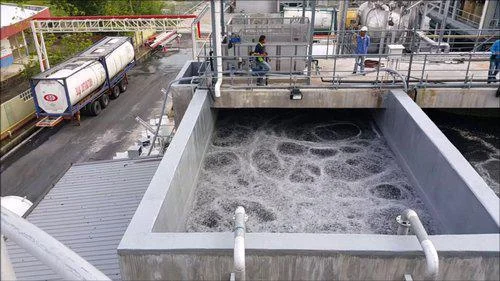
Small plastic carriers move freely inside the tank. Bacteria grow as a thin biofilm on their protected surface. Because the biofilm stays attached, the biomass does not wash out. Consequently, the reactor keeps working during load peaks.
Air or mixers keep the carriers moving. This movement brings food and oxygen to the biofilm. Moreover, it keeps the film thin and active. For similar organic loads, read our guide to MBBR dairy wastewater treatment.
Key Design Steps
Pretreatment comes first. Good screening removes hair, hooks, and solids. Next, a dissolved air flotation unit removes most of the fat. Without this step, grease will foul the carriers.
- Equalization tank: It smooths flow and load before the reactor.
- Two-stage MBBR: The first stage removes COD, and the second stage handles nitrogen.
- Carrier fill ratio: Most plants fill 40 to 50 percent of the tank volume.
- Clarifier or DAF: A final unit separates the excess biofilm.
Benefits for Meat Processors
The footprint is small, so you can often reuse existing tanks. Operation is also simple because there is no sludge return. In fact, many plants cut their energy use after an upgrade. Furthermore, the system recovers quickly after a shock load.
Meanwhile, effluent quality stays steady. Many plants reach discharge limits for COD and ammonia. According to the US EPA, meat plants must meet national effluent guidelines. Therefore, a reliable biological stage is essential.
What Results Can You Expect?
Well-run MBBR slaughterhouse wastewater plants often remove most of the COD in the first stage. The second stage then converts ammonia to nitrate. For example, a plant with good fat removal can reach stable ammonia levels all year. However, results depend on pretreatment and steady aeration.
Monitoring keeps the system healthy. Check dissolved oxygen, pH, and temperature every day. In addition, look at the carriers each week. Healthy biofilm looks thin and brown, while thick grey slime signals overloading. Therefore, act early when you see changes.
Common Problems and Fixes
Grease is the most common issue. It forms a film on the carriers and lowers oxygen transfer. To fix this, improve fat removal upstream. Likewise, check the aeration often.
Foam can also appear after cleaning chemicals enter the tank. For this reason, send strong disinfectants to a separate line when possible. Finally, watch the pH, because blood and caustic cleaners shift it quickly.
Next Steps for Your Plant
Start with a wastewater test and a pilot if possible. Then size the reactor from measured COD and nitrogen loads. Our team can help you choose the right carriers and layout. Contact Oxy-Tech to plan your MBBR slaughterhouse wastewater project.