
MBBR brewery wastewater treatment gives breweries a compact way to meet discharge limits. Brewery effluent is rich in sugar, starch, and yeast. Therefore, its organic load is high and changes with each brew. A moving bed biofilm reactor handles these swings well.
Why Brewery Effluent Needs Careful Treatment
Brewery effluent can contain up to ten liters of water per liter of beer. It carries sugars, alcohol, and spent yeast. As a result, COD levels are often very high. In addition, the pH swings between acid and caustic during cleaning.
The load is also uneven. Brewing, filtering, and bottling run in batches. For example, a tank wash can send a strong pulse into the drain. Therefore, the plant needs a steady and forgiving process.
How MBBR Brewery Wastewater Systems Work
Plastic carriers float freely inside the reactor. Bacteria grow on their protected surface as a thin biofilm. Because the biofilm stays on the carriers, it does not wash out. Consequently, the system keeps working after sudden load peaks.
Air bubbles keep the carriers moving. This movement brings sugar and oxygen to the biofilm. Moreover, brewery sugars are easy to digest, so the biofilm grows fast. For air supply tips, see our guide to MBBR aeration design.
Main Design Steps
Start with screening to remove grain, hops, and labels. Next, add an equalization tank to smooth the flow. Without it, strong pulses can overload the reactor. A neutralization step also keeps the pH in a safe range.
- Equalization and pH control: It protects the biofilm from sudden shocks.
- First MBBR stage: It removes most of the soluble COD.
- Carrier fill ratio: Most plants fill 40 to 50 percent of the tank volume.
- Final separation: A clarifier or DAF removes the excess biofilm.
Benefits for Breweries
The reactor is small, so it fits inside most existing sites. Operation is also easy because there is no sludge return. In fact, many breweries need fewer operator hours after an upgrade. Furthermore, the system restarts quickly after a short shutdown.
This matters for seasonal producers. Production may stop for weeks and then jump back. However, the biofilm stays alive on the carriers if you keep a little air and feed. Therefore, recovery takes days instead of weeks.
What Results Can You Expect?
Good MBBR brewery wastewater plants remove most of the COD in one stage. A second stage or polishing step then improves the final quality. For example, many sites reach sewer discharge limits with simple pretreatment. According to the US EPA, reducing waste at the source also lowers the treatment load.
Monitoring keeps the process healthy. Check dissolved oxygen, pH, and temperature every day. In addition, inspect the carriers weekly. Healthy biofilm looks thin and even, while thick slime signals overloading. Therefore, act early when you see changes.
Common Problems and Fixes
Low pH is the most common issue. Cleaning chemicals and fermentation acids can push it down fast. To fix this, dose alkali in the equalization tank. Likewise, avoid sending strong cleaners straight to the reactor.
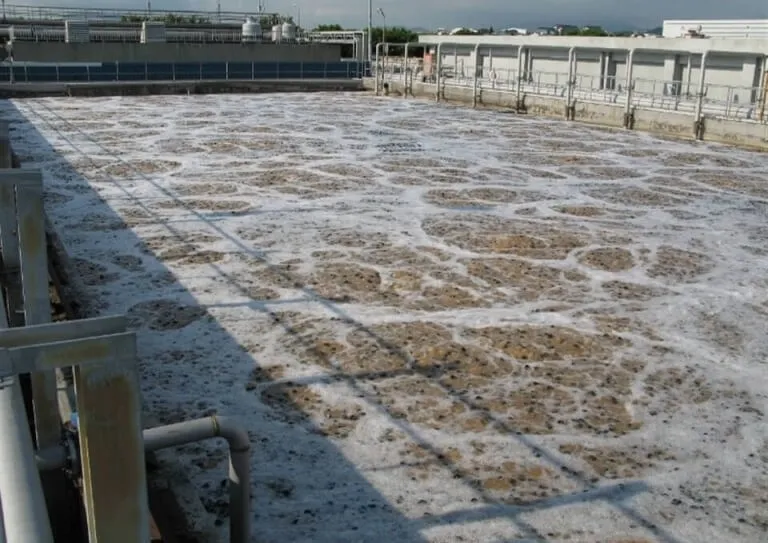
Foam can also appear because of yeast and proteins. For this reason, keep air rates stable and remove solids early. Finally, check nutrients, because brewery water is often low in nitrogen and phosphorus.
Next Steps for Your Brewery
Start with a wastewater analysis over several brew cycles. Then size the reactor from the measured COD load. Our team can help you choose the right carriers and layout. Contact Oxy-Tech to plan your MBBR brewery wastewater project.